
RUOResearch use only
LotBatch-numbered
−20°CShipped desiccated
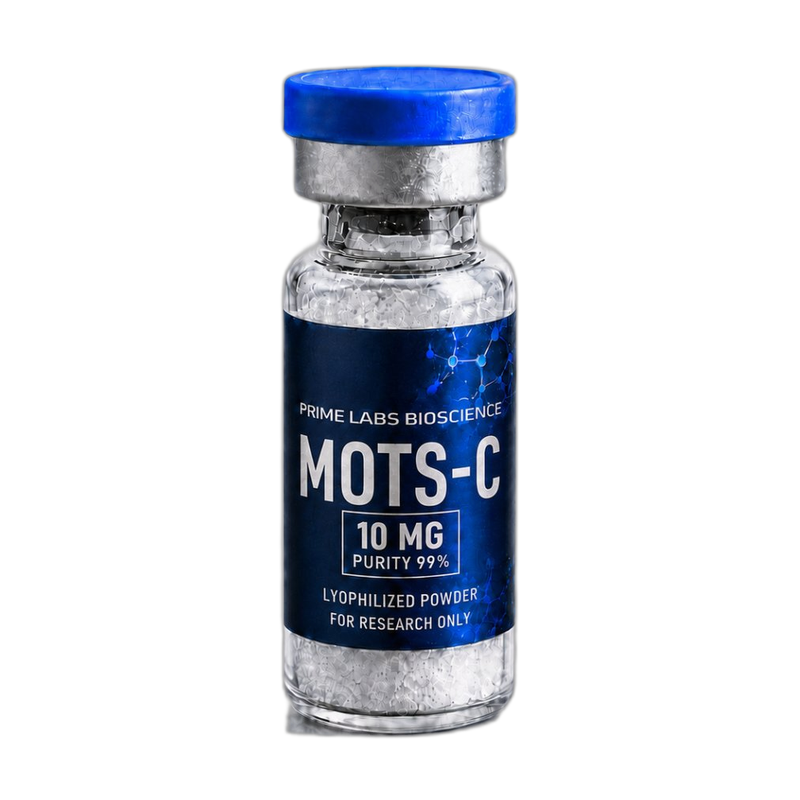
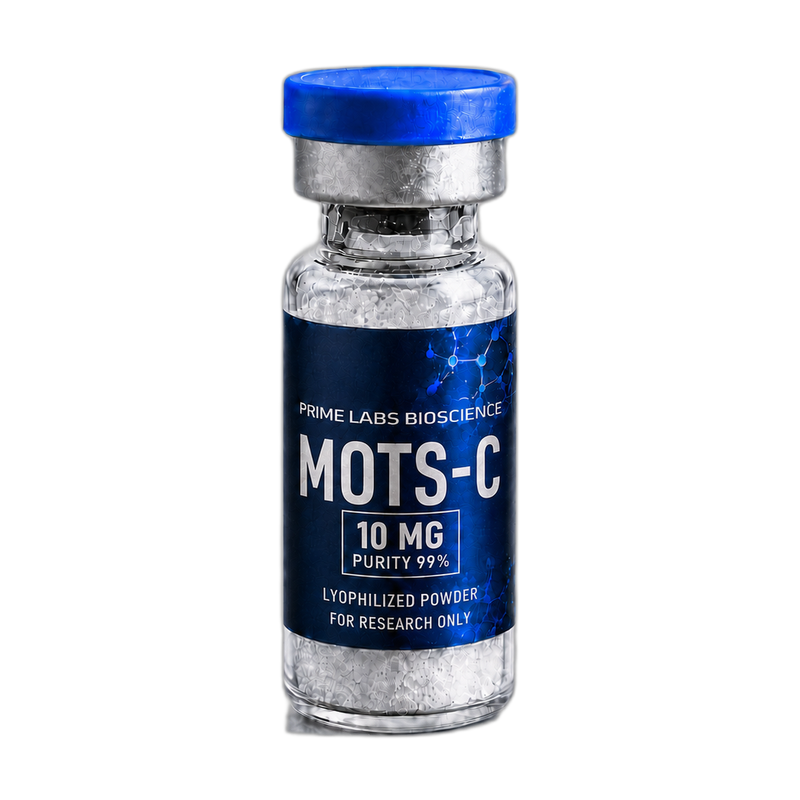
MOTS-c Peptide
Mitochondrial-derived peptide, lyophilised, for in-vitro metabolic and cellular-senescence research.
$55.00
In stock — ships next business day
Quick Facts
| SKU | BPL-MOTSC |
|---|---|
| Molecular Weight | 2174.61 g/mol |
| Sequence | Met-Arg-Trp-Gln-Glu-Met-Gly-Tyr-Ile-Phe-Tyr-Pro-Arg-Lys-Leu-Arg |
| Physical Form | Lyophilized Powder |
| Storage | Store at -20°C |
Research Information
MOTS-c is a 16-amino-acid peptide encoded by the mitochondrial 12S rRNA gene, part of the group known as mitochondrial-derived peptides. It is studied as a signalling molecule rather than a structural one.
Published in-vitro work uses it in AMPK-pathway activation assays, in glucose-uptake and fatty-acid-oxidation studies in myotube and adipocyte culture, and in models of metabolic stress and cellular senescence. It also appears in mitochondrial-retrograde-signalling research, where the question is how the mitochondrion communicates with the nucleus.
Supplied as a lyophilised powder. Reconstitute with bacteriostatic water, keep refrigerated after reconstitution, and aliquot for longer storage.
Supplied strictly for in-vitro laboratory research. Not for human or veterinary use, and not for food, drug, cosmetic or diagnostic application.
Published in-vitro work uses it in AMPK-pathway activation assays, in glucose-uptake and fatty-acid-oxidation studies in myotube and adipocyte culture, and in models of metabolic stress and cellular senescence. It also appears in mitochondrial-retrograde-signalling research, where the question is how the mitochondrion communicates with the nucleus.
Supplied as a lyophilised powder. Reconstitute with bacteriostatic water, keep refrigerated after reconstitution, and aliquot for longer storage.
Supplied strictly for in-vitro laboratory research. Not for human or veterinary use, and not for food, drug, cosmetic or diagnostic application.
For laboratory and research use only. Not intended for human or animal consumption. All product information is derived from published preclinical research and does not constitute medical advice or claims.
Related Research Compounds
View All